





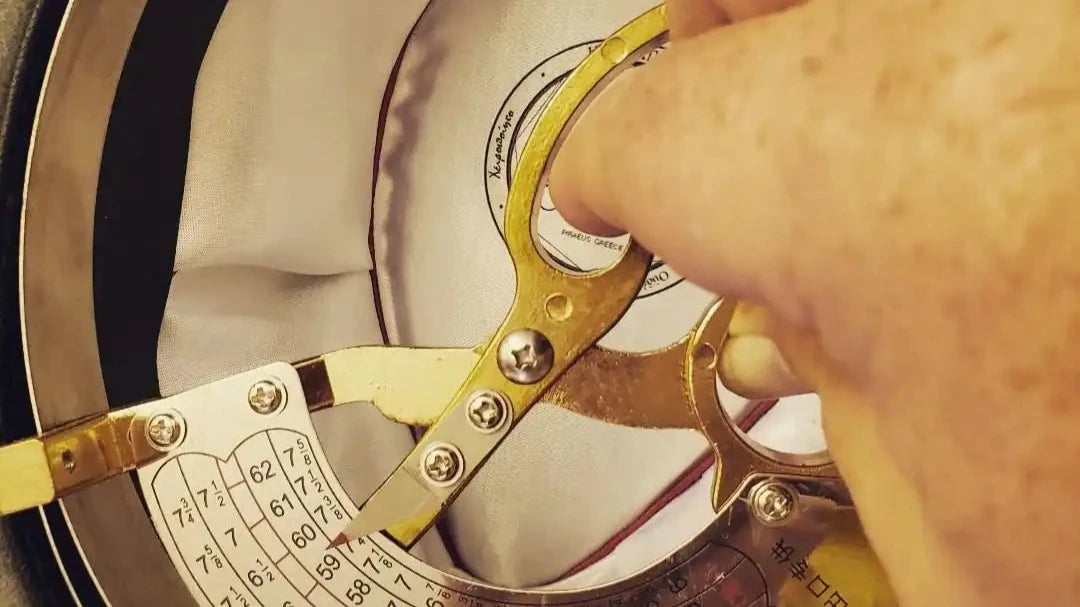


In fine hatmaking, ribbon width is often discussed in lignes rather than millimetres. This guide explains the traditional unit, shows how it relates to modern measurements, and helps you choose a ribbon width with more confidence when commissioning a custom hat.
Ligne is a historic French unit that remains part of the language of ribbon manufacture and traditional hatmaking. For the aficionado who values proportion, period references, and authentic craft vocabulary, it is still a useful way to discuss hat bands and trims.
Millimetres are easier for many clients to understand at a glance, but lignes continue to appear in vintage references and workshop conversations. Knowing both allows you to translate a classic specification into a modern custom order without losing the original intent.
How ribbon width affects the look of a hat
- 15 to 20 mm feels restrained and elegant, often suited to lighter and dressier silhouettes.
- 25 to 30 mm creates a balanced classic band that works across many crown and brim shapes.
- 40 to 50 mm appears more assertive and sculptural, giving the hat stronger visual authority.
- 70 mm becomes a true design statement where the ribbon defines the personality of the piece.

Ribbon width converter
For practical use, the converter below translates ribbon widths between centimetres, millimetres, and lignes. It also includes the standard ribbon widths used by Agnoulita Hats, so you can compare a historic unit with real workshop options immediately.
Convert ribbon widths instantly
For hat ribbons, 1 ligne is approximately 2.2558 mm. Enter a value or choose a standard workshop width to see the conversion.
The result updates to show the most practical workshop reading first.
Agnoulita standard ribbon widths
Agnoulita standard ribbon widths in millimetres and lignes
The following widths reflect the ribbon sizes commonly used in our workshop. The ligne values are approximate, but close enough to help when comparing vintage references, trim orders, or custom design discussions.
| Millimetres | Approximate lignes | General character |
|---|---|---|
| 15 mm | 6.65 ligne | Restrained, light, dress-oriented |
| 20 mm | 8.87 ligne | Elegant and discreet |
| 25 mm | 11.08 ligne | Balanced classic proportion |
| 30 mm | 13.30 ligne | Traditional, versatile, authoritative |
| 40 mm | 17.73 ligne | Bolder visual presence |
| 50 mm | 22.16 ligne | Strong, sculptural statement |
| 70 mm | 31.03 ligne | Distinctive, dramatic design gesture |
Choosing ribbon width with intention
Ribbon selection should support the entire hat rather than exist as an isolated choice. Crown height, brim width, felt weight, and the mood of the finished piece all influence whether a band feels precise, balanced, or overly dominant.
For this reason, a traditional width such as 25 mm or 30 mm often feels especially versatile. It preserves presence without overpowering the profile, which is one reason these widths have remained enduring references in classic hatmaking.
When this guide is most useful
- When referencing a vintage hat description that uses lignes.
- When comparing trim proportions across different hat styles.
- When discussing custom details with a hatmaker more precisely.
- When deciding whether a ribbon should feel subtle, balanced, or bold.
Questions an aficionado may ask
Why not list ribbon widths only in millimetres?
Because many references in classic hatmaking, vintage catalogues, and traditional trim discussions still use lignes. Showing both respects the craft while keeping the information practical for modern clients.
Are ligne conversions exact in practice?
They are sufficiently precise for design and ordering decisions, but the final choice still depends on the complete balance of the hat. Measurement is one part of proportion, not the whole story.
Which ribbon width is most traditionally versatile?
For many classic custom hats, 25 mm and 30 mm are especially balanced options. They are substantial enough to register clearly, yet restrained enough to stay elegant across many silhouettes.

