




There is a moment that happens in the mirror, just before you decide who you are going to be today.
Shirt, trousers, maybe a jacket. All fine. All safe. Then your eyes land on a hat shape you have always admired from a distance. You try it on, tilt your head, and in a second you can see two futures: one where you leave it on and walk out the door, and one where you take it off and go back to disappearing into the crowd.
The Nexus was born for that exact second.
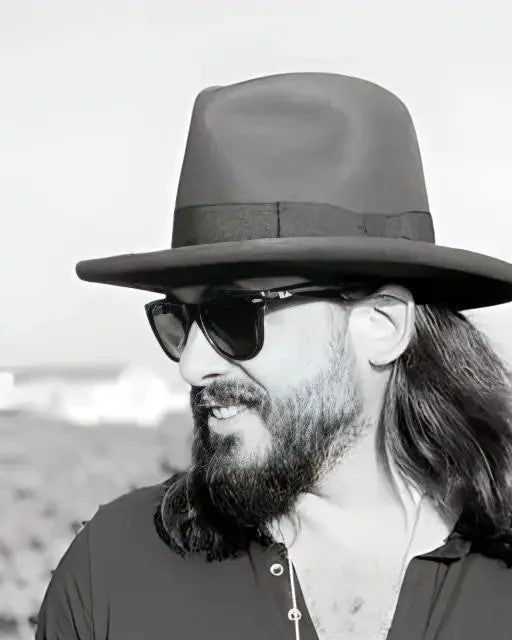
The man who “wasn’t a hat guy”
He didn’t look like the stereotype you’d expect. No cosplay, no costume, no obsession with vintage forums. Just a man who liked well‑made things and was tired of flimsy, forgettable accessories.
When he first wrote to us, he didn’t list problems. He didn’t complain about cheap wool, awkward shapes, or how every fedora he had tried felt like it belonged to somebody else. He simply said:
“I think it’s time I had a proper fedora. One I can actually live in.”
We invited him to slow down for a moment and talk about something most shops never ask: how he moves through his days. Not just his head size, but his pace. How he commutes. Whether he takes his coffee standing at the counter or sitting at the corner table. The places where he wants to blend in and the rare nights when he doesn’t.
That conversation is where the Nexus truly started.

What we listen for during customization
When someone clicks “CUSTOMIZE THIS STYLE,” we are not just changing a hat. We are learning how they want it to live with them: the fit they prefer, the proportions that suit their face, and the small adjustments that make a familiar shape feel personal.
Designing something that doesn’t shout
When you look at photos of classic fedoras, it’s easy to think it’s all about the crease or the brim. Those things matter, but what most people actually feel is balance.
In the workshop, balance is not a vague idea. It’s measurements, angles, weight in the hand. It is the difference between a hat that walks into the room before you, and a hat that quietly completes you.
We started from a simple center‑dent crown. Clean, familiar, almost understated. Then we shaped it slowly on the block, coaxing the felt into a line that would sit naturally on the head rather than hovering above it, hat and wearer in two separate worlds.
The brim was given room to move. A snap brim can lift or lower with a touch of the fingers, which means your face doesn’t have to commit to only one expression. Down a little for sharp winter light on the way to the office. Up when you’re inside, laughing with friends, and don’t need the same shield.
Every curve, every subtle transition, was refined until it stopped drawing attention to itself and started drawing attention to the person wearing it.

What you don’t see, you feel
From a distance, the Nexus looks simple. Up close, simplicity reveals itself as discipline.
The felt is blocked by hand, not just pressed into shape. It is coaxed, steamed, and persuaded until the material holds form without stiffness. There is a particular resistance under the fingertips when the crown is right—a quiet spring that tells you it will remember its shape long after a hundred wears.
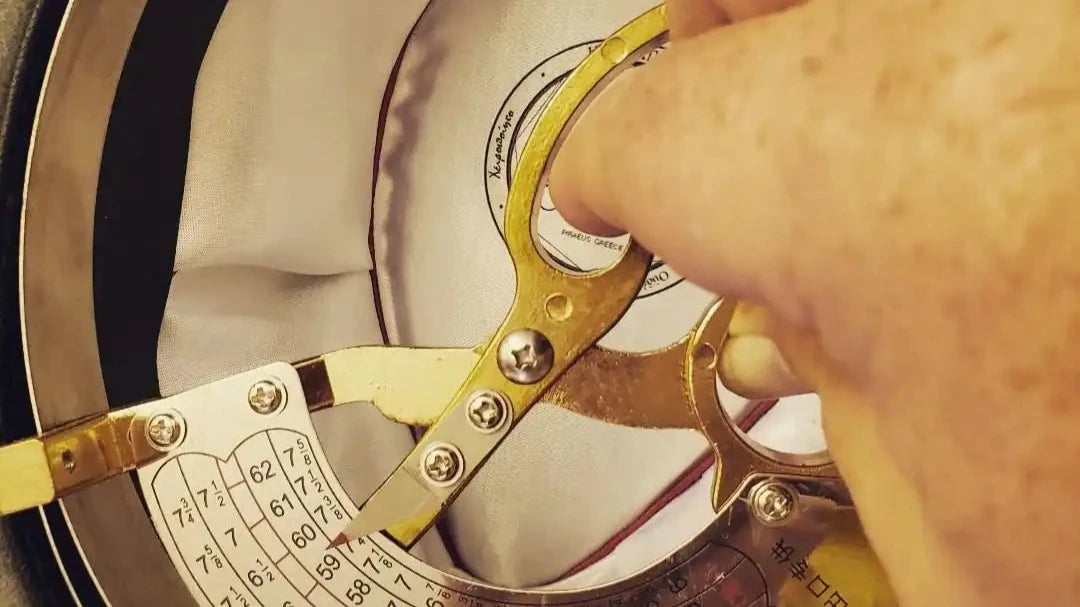
Inside the hat, the sweatband is carefully sized and set in, not as an afterthought, but as the bridge between your head and the form we created. Too tight, and you think of the hat all day. Too loose, and you never quite trust it. The goal is that it disappears, letting you forget about it entirely until you take the hat off at night and notice you never adjusted it once.
The edge of the brim is finished so that it holds a line without feeling sharp. When someone runs a finger along it, they don’t see craftsmanship before they feel it. They just register a solid confidence; the sense that this isn’t an accessory with an expiration date.
From measurements to something that feels like “yours”
What turns a classic pattern into your hat is not a single dramatic choice—it’s a sequence of small, precise decisions.
It begins with the most basic fact: your size. You give us the number, but we are listening for something else as well. Are you between sizes? Do you like a bit of room for hair or prefer a close, secure fit? You might only mention it in passing; we write it down as essential.
From there, we look at proportions. Some faces welcome a touch more brim, others need a slightly gentler curve at the front to keep the focus on the eyes. A sharper pinch at the front of the crown can add definition, while a softer one keeps things easy and relaxed. We guide these choices, but they’re never random—they are shaped by how you want to be seen, even if you don’t say it directly.
By the time we mark your order on the bench, the Nexus is no longer abstract. It is your Nexus: the same core design, tuned quietly around your features and your life.

The slow work no one sees
There is a stretch of time, once you confirm the style, when nothing seems to happen from the outside. But in the workshop, the days are very full.
Felt is steamed and relaxed before it ever sees the block. We let it breathe, so it doesn’t fight us later. The crown is shaped in stages, with cooling periods in between, because rushing this step creates tension in the material that you might not see but will always feel.
We cut, sew, and attach the ribbon with the same care as the primary structure. Not because ribbon is complicated, but because anything that sits on top of a foundation as precise as a fedora’s should respect the work beneath it.
Each hat rests before final shaping and finishing. That pause matters. When we come back to it, we see it with fresh eyes, checking lines, symmetry, the way the brim wants to sit when no one is touching it. Only then do we give it the last gentle press, the final brush, the quiet nod that says: yes, this one can go out into the world.
The first time out the door
He wrote again a few days after the hat arrived.
No big speech. No dramatic story. Just a short note about a walk to a familiar café in his city. The route was the same, the jacket was the same, even the coffee order was unchanged.
The difference was that this time, the hat stayed on.
He kept it on while he greeted the barista, while he sat at his usual table, while he watched people pass by the window. It wasn’t about whether anyone looked at him differently. It was about how quiet his own mind felt. No second‑guessing. No sense of costume. Just the subtle, grounding weight of a well‑made fedora doing what it’s supposed to do: framing the person, not replacing him.
That is the moment the Nexus was built for.

Your own version of the Nexus
Some people will choose this hat exactly as they first see it. Others will feel the urge to nudge it—just a little—toward their world.
Maybe you want a touch more brim. Maybe you prefer the crown slightly softer, the pinch a bit more or less defined. Maybe you live somewhere with harsher weather and need a balance between elegance and daily practicality.
That is why, on every product page, you’ll find the invitation to take part in the process yourself.
When you reach for “CUSTOMIZE THIS STYLE,” you’re not starting from zero. You’re starting from a fedora that has already proven itself as a quiet everyday companion, then shaping it around your own habits and preferences. We bring the blocks, the felt, the hands that have repeated these movements thousands of times. You bring your life, your pace, and that moment in the mirror when you decide you’re ready for something that doesn’t feel disposable.
The Nexus is our answer to one simple question:
“What if a classic fedora could feel like it was always meant to be yours?”
If that question has been sitting somewhere in the back of your mind for a while, this might be the right time to see where it leads.

