




There is a moment, just before you step out of a hotel in a new city, when everything feels slightly misaligned.
You know the day will be full—streets you haven’t walked yet, names you haven’t learned how to pronounce, a light you haven’t tested on your skin—but right then you are just a visitor with a map and a plan. You check your pockets, your bag, the strap of your camera. You pull your jacket straight.
Then your hand finds the hat.
In Morocco, that was where every day began.
The man who didn’t want to look like a tourist
He didn’t say it out loud, but it was there in the way he packed.
No zip‑off trousers. No floppy branded cap with a logo from another country. No “travel outfit” that only made sense in airports. He wanted to move through Morocco with a certain discretion—curious, respectful, present—but not pretending to be from there either.
The challenge was simple to describe and hard to solve: how do you dress for heat, dust, sea wind, and long days on foot without looking like the lost extra from an adventure movie?
At home, the answer had quietly become a fedora.
On this trip, he decided to trust it.
He folded shirts and knits around one hat shape. Neutral tones, honest fabrics, a pair of trousers that could handle both the medina and a seafront café. He knew the streets would make their own demands. The question was whether the hat would keep up.

First test: the medina maze
The medina came at him in sound before sight.
Voices layered over one another. Scooters somewhere behind him. A call to prayer threading across rooftops. The air changed temperature every few steps—cool shadow, then sun, then the warm breath of a spice stall.
He felt the usual early‑trip awkwardness. The backpack straps a little too tight. The camera slightly too visible. The uncertainty of whether to stop or keep moving when someone spoke to him in a language that wasn’t his.
But the hat stayed calm.
The brim cut the glare from a café sign, softening the hard white of the alley walls. The crown added a vertical line above the collar of his jacket, giving his silhouette something steady among the hanging carpets and swinging lanterns. It didn’t shout “local.” It just said: this person meant to step outside today.
At one point he caught his reflection in a darkened window—dust on his boots, map in his hand, hat still sitting at the same angle it had been in the hotel room. He didn’t look like he belonged there.
He looked like he belonged to himself there.
Why a real fedora works better than a travel cap here
A well‑blocked brim shapes the light without collapsing, and a custom fit means you can navigate narrow alleys and crowds without constantly reaching for your head. It becomes part of your outline instead of an extra item to manage.

Between sea wind and city noise
Morocco has a way of throwing you from one world into another in a single day.
Morning among tiled courtyards and carved doorways. Afternoon by the Atlantic, sky washed out and the wind doing its best to rearrange anything not properly fastened. That’s where lesser hats usually fail—either clamped too tight to move or flimsy enough to fold at the first gust.
His stayed where it should.
On the rocks by the water, the felt took the wind without complaint. The brim flexed and settled. The band held its line. He could tuck his hands into his pockets, look out over the waves, and actually feel the day instead of wrestling with what was on his head.
Later, up in a glass‑fronted café overlooking the bay, the same hat suddenly felt different again. Against pressed tablecloths and a printed menu, it read as deliberate city style rather than travel gear. When he took it off and set it on the chair beside him, the server’s eyes went to it once—just once—and then to him with the kind of small nod that says, “You thought this through.”
That was the quiet test he hadn’t known he’d set for himself: could one hat belong convincingly both on wet stones and under polished cutlery?
It passed.

The third companion you didn’t book
Travel is mostly about edges: between sleep and waking, between languages, between the person you were at home and whoever you are between flights.
On this trip, the hat became an unplanned third companion.
It was there when he stepped aside in a narrow alley to let a mule pass. It was there when he leaned against a painted wall, the brim cutting a clean line across a mural of palms and sun. It was there when he tried to decide whether to turn left toward the kasbah or right toward the port.
In photographs, the hat is the constant.
Jacket changes. Sweater changes. Light and background shift from blue ceramics to ochre walls to stormy sea. But the fedora holds the frame. It makes a visual thread out of days that might otherwise have dissolved into a blur of markets and meals.
That consistency does something inside your head too. You stop thinking of each outfit as a separate calculation. Instead, you have a base rhythm: me, this hat, this day. The rest is improvisation.

What the hat carried (and what it didn’t)
A travel hat has work to do long before it meets the sun.
This one had been blocked for a head that sits in motion more often than still. The crown was shaped to clear the shell of a backpack strap. The brim was tuned not to collide with a camera strap crossing the chest. The fit was set in that narrow space between “won’t blow off on the ferry” and “won’t leave a red line on the forehead after an hour.”
The felt had enough body to stand up to airport handling, yet enough give to bounce back from being rested on café chairs, stair rails, and the odd low wall. The sweatband was there quietly doing its job in hot souks and cool evenings, so he never once thought about taking the hat off just to give his head a break.
What it did not carry was preciousness.
He never felt the need to protect it from the trip. It came down onto stone steps. It brushed against tiled doorways. A bit of dust here, a breath of sea salt there. The hat absorbed all of it and looked better for the slight wear—like the trip had layered a story into it rather than damage.
That is the difference between a hat you pack for photos and a hat you take because you trust it.

Coming home with more than souvenirs
Back home, unpacking felt different this time.
The usual things came out of the suitcase: postcards, a small piece of pottery, the inevitable bag of spices wrapped twice to keep the scent from claiming all his shirts. But the hat came out not as cargo, but as witness.
It smelled faintly of wood smoke and sea air. The sweatband had a new softness from long days. The crown held one or two ghost impressions from the way he had grabbed it absent‑mindedly while laughing, or while ducking under a low arch.
When he hung it on its hook, the hallway suddenly felt too still. A row of quiet, city‑tame hats waited beside it, clean and untested. For the first time, he could see the difference.
This was no longer just a well‑made fedora.
It was a piece of traveling equipment that had learned the shapes of other countries.
Building a travel hat that can handle Morocco
When we build hats for travel, Morocco is one of the places we think about, even if the wearer never mentions it by name.
We imagine narrow alleys where you are constantly turning your head. Sudden sun after shadow, where a brim has to react faster than sunglasses. Sea wind lifting corners of clothing and trying, politely but persistently, to steal anything not properly fitted. Cafés where you want to feel composed, not geared up for a hike.
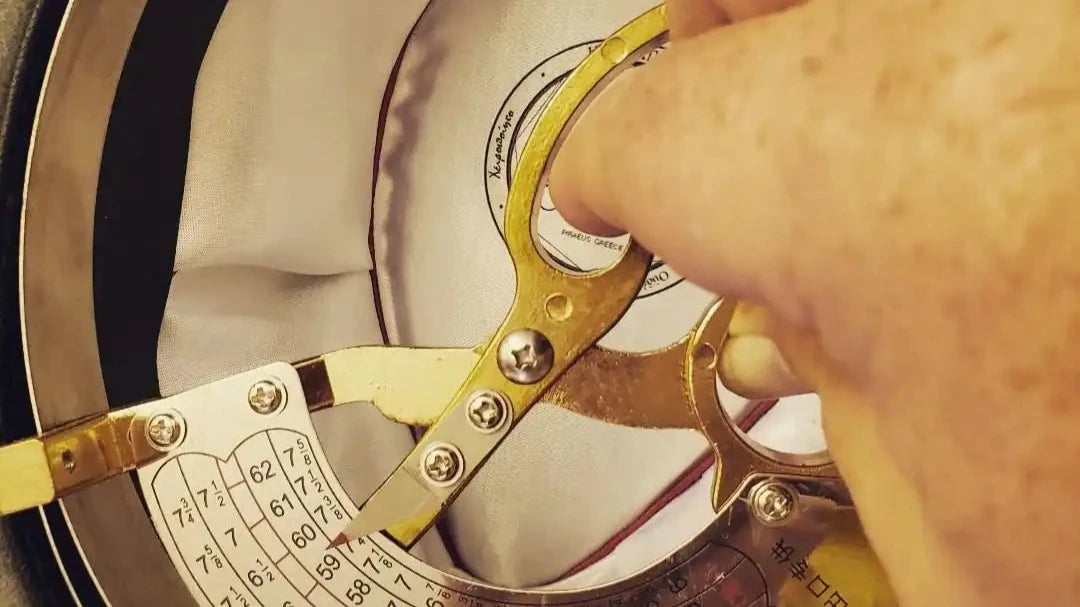
So we choose felt that resists collapse but welcomes use. We set the head size to your measurements, then account for how you’ll actually wear it—hair, climate, how much movement your days usually involve. We tune the crown and brim so the hat can sit naturally with a backpack, a camera strap, or the collar shapes you gravitate to.
And on every product page you’ll see the same quiet invitation: “CUSTOMIZE THIS STYLE.” For a travel hat, that doesn’t mean making it louder. It means telling us enough about your journeys that we can engineer the ease into it before you ever zip the suitcase.
Share your next journey with us
When you reach out to customize a style, tell us where you’re headed, what you carry, and how you move through a day. Those small details shape how we block the felt and set the fit for you.
For the trip you haven’t booked yet
He thought that hat was for Morocco.
Now he reaches for it on ordinary days: buying groceries, meeting a friend for coffee, walking through his own city on a too‑bright afternoon when the pavements feel a little like a foreign place.
The fedora that knew the way through medinas and along sea walls also knows the way from his front door to the corner café. It has seen him lost and found in streets with different alphabets. That memory doesn’t leave.
Every time he lifts it from its hook, there’s a small, familiar sensation in the palm of his hand—a weight that says, without drama:
If you have a journey in the back of your mind—Morocco or otherwise—and you’re wondering whether a real hat belongs in that picture, the answer might be simpler than you think.
Bring one that is made for travel, not just for photos.

