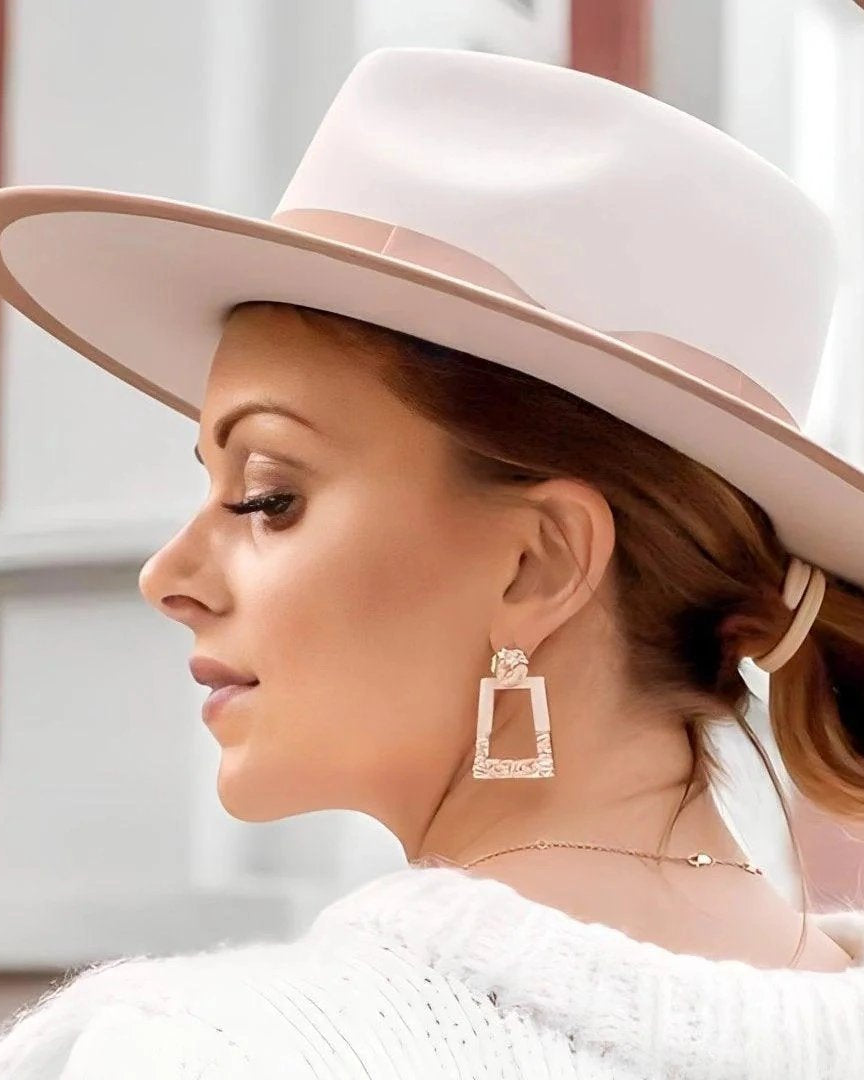




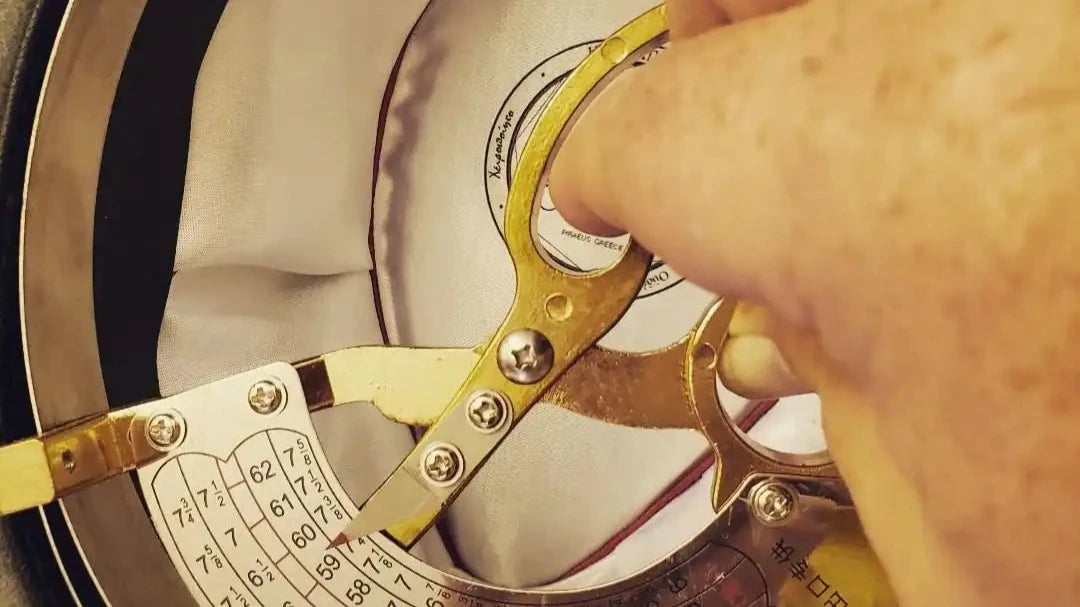


Verifying the correct fit and shape compatibility of your hat with your head is paramount. If you observe that the hat exerts pressure on specific parts of your head, or if you detect a gap between your head and the inner sweatband of the hat, particularly above your ears, then it's clear: you require a long oval hat.
But how do you know for certain? Most people assume all heads are roughly the same shape — until they experience the discomfort of a poorly fitting hat. The truth is, head shapes vary as much as shoe widths, and understanding yours is the key to hat-wearing comfort.
Take 5 minutes to measure before choosing your hat. This expert fitting guide ensures your handcrafted felt hat will fit comfortably and look exactly as intended.

The Hidden Problem: Why Standard Hats Don't Fit Everyone
Picture this: You've invested in a beautiful hat. The style is perfect, the material is premium, but something feels... off. Perhaps there's pressure at the front and back of your head. Or maybe you notice gaps above your ears where the sweatband should sit flush against your head.
These aren't signs of a wrong size — they're indicators of a shape mismatch.
The hat industry's dirty secret? Most manufacturers produce only regular oval hats, ignoring the 20-30% of the population with long oval heads. It's like a shoe store only carrying medium width shoes and wondering why customers complain about fit.
Understanding Head Shapes: The Two Main Categories
| Aspect | Regular Oval | Long Oval |
|---|---|---|
| Prevalence | Most common shape (70-80% of population) | 20-30% of population |
| Characteristics | Balanced proportions with similar width and length ratios | Longer front-to-back measurement, narrower side-to-side |
| Fit Experience | Comfortable with standard hat shapes | Pressure at front/back with standard hats, gaps at sides |
| Visual Check | Head appears round when viewed from above | Head appears elongated when viewed from above |
Why Head Shape Matters
Just like how shoes come in different widths, hats need to match your unique head shape for optimal comfort and style. There are two main head shapes:
Regular Oval
- Most common shape
- Balanced proportions
- Fits standard hats well
Long Oval
- Longer front-to-back
- Narrower side-to-side
- Needs specialized fit
The Science Behind Head Shape Measurement
Your head shape is determined by the ratio between two critical measurements:
- Circumference: The standard measurement around your head
- Front-to-Back Length: From forehead center to back of head
- Side-to-Side Width: Temple to temple across the widest part
When the length exceeds the width by more than 1 cm (or 3/8 inch), you have a long oval shape. This seemingly small difference creates significant fit challenges with regular oval hats.
Why This Matters More Than You Think
Comfort Issues from Wrong Shape:
- Pressure Points: Headaches from concentrated pressure
- Red Marks: Visible indentations on forehead
- Constant Adjusting: Hat never feels "right"
- Wind Vulnerability: Hat easily blown off due to poor contact
Visual Impact:
- Distorted Proportions: Hat may look too tall or narrow
- Brim Angle Issues: Uneven brim line affecting style
- Crown Shape Problems: Intended shape doesn't hold properly
Pre-Measurement Preparation
What You'll Need:
- A flexible measuring tape (cloth or soft plastic)
- A mirror (helpful but not essential)
- 5 minutes of uninterrupted time
- Optional: A friend to help ensure accuracy
Best Practices:
- Measure where you'll wear the hat (one finger width above eyebrows for fedoras)
- Keep tape level and parallel to the floor
- Don't pull too tight — snug but comfortable
- Take each measurement twice for accuracy

Your Personal Head Shape Calculator
Now that you understand why head shape matters, it's time to discover yours. Our interactive calculator will guide you through the measurement process and instantly determine whether you have a regular or long oval head shape.
This tool has helped thousands of customers achieve perfect hat fit on their first order, eliminating the guesswork and disappointment of shape mismatches.
Features:- Unit selection (cm/inches)
- Step-by-step measurement guide
- Instant shape determination
- Personalized fitting recommendations
- Visual confirmation of your head shape
Find Out Your Head Shape
Interpreting Your Results
If You're Regular Oval:
Congratulations! You'll fit comfortably in standard hat shapes. However, you still benefit from:
- Custom sizing for perfect circumference fit
- Professional blocking for your exact measurements
- Minor adjustments for personal comfort preferences
If You're Long Oval:
You've discovered why standard hats never felt quite right! You need:
- Specially shaped blocks designed for long oval heads
- Modified construction techniques
- Adjusted proportions to maintain intended style
- Professional guidance on style selection
The Custom Solution Advantage
Understanding your head shape transforms hat buying from gambling to precision. Custom hat makers can:
For Regular Oval
- Fine-tune standard blocks to your exact measurements
- Ensure consistent fit across different styles
- Optimize comfort for all-day wear
For Long Oval
- Create or modify blocks specifically for your shape
- Maintain style integrity while accommodating shape
- Eliminate all pressure points and gaps
- Achieve the "forgotten you're wearing it" comfort level
Common Measurement Mistakes to Avoid
- Measuring Over Hair: Thick or styled hair adds bulk
- Tape Not Level: Creates inaccurate circumference
- Pulling Too Tight: Hat will feel loose if tape is overtightened
- Wrong Position: Measuring too high or low on head
- Ignoring Ear Position: Not accounting for ear placement affects fit
Professional Tips for Perfect Fit
The One-Finger Rule
Measure where you plan to wear your hat. For fedoras, this is typically one finger width above your eyebrows. For casual caps, it might be slightly higher.
Size Up When Between
When your measurement falls between sizes, always go larger. Size reducers can perfect the fit, but you can't make a too-small hat bigger.
The Shake Test
A properly fitted hat should stay in place when you shake your head but not leave marks on your forehead after wearing.
Consider Hair Changes
If you dramatically change hairstyles (long to short, straight to curly), your hat fit requirements may change.
Special Considerations
For Extended Sizes (Above 60cm)
Large head sizes often correlate with long oval shapes. If you wear size 61cm or above, pay extra attention to shape determination.
For Small Sizes (Below 55cm)
Smaller heads may have more pronounced oval characteristics. Proper shape identification becomes even more critical for comfort.
For In-Between Shapes
Some people fall between regular and long oval. Professional consultation can determine the best approach for your unique measurements.
The Investment Protection Angle
Consider this: A premium custom hat represents a significant investment. Getting the shape wrong means:
- Expensive returns and exchanges
- International shipping costs
- Weeks of waiting for replacements
- Potential disappointment with a non-returnable custom item
Five minutes of accurate measurement protects your investment and ensures satisfaction from day one.

Beyond Basic Shape: Additional Factors
While regular vs. long oval is the primary distinction, other factors influence fit:
Crown Height Preferences
- Higher crowns suit longer faces
- Lower crowns complement round faces
- Personal style preferences matter
Brim Considerations
- Wider brims need stable fit to prevent tipping
- Narrow brims are more forgiving of minor fit issues
- Brim angle affects overall appearance
Material Impact
- Felt hats conform slightly over time
- Straw hats maintain rigid shape
- Leather sweatbands adapt to head contours
Frequently Asked Questions
Q: Can my head shape change over time?
A: Adult head shape remains relatively constant, though weight changes can slightly affect measurements. Hair loss or growth has more impact on fit than actual shape changes.
Q: What if I'm exactly between regular and long oval?
A: This is called "slight long oval." Most custom hat makers can accommodate this with minor block modifications. Communicate your in-between status during ordering.
Q: Do different hat styles require different shape considerations?
A: The basic shape requirement remains constant, but some styles are more forgiving. Wide-brimmed hats show shape mismatch more obviously than close-fitting caps.
Q: Can a regular oval person wear a long oval hat or vice versa?
A: While possible, it's not comfortable. Regular oval wearers will find long oval hats loose at sides, while long oval wearers experience pressure with regular shapes.
Q: How accurate does my measurement need to be?
A: Within 0.5cm or 1/4 inch is sufficient. The calculator accounts for minor measurement variations in its determination.
Q: Should I measure with my hair styled as I normally wear it?
A: Yes, measure under normal conditions. If you frequently change hairstyles dramatically, consider measuring both ways.
Q: What about extra-long oval or wide oval shapes?
A: These extreme variations exist but are rare. The calculator will identify if your measurements suggest consulting directly with a hat maker.
Q: Can children use this calculator?
A: Yes, but children's heads are still growing. Measurements should be retaken every 6-12 months for growing children.
Q: Does head shape affect hat style choices?
A: Shape primarily affects fit, not style. Once properly fitted for your shape, all classic styles become wearable options.
Q: What if standard hats have always fit me fine?
A: You likely have a regular oval shape, but measuring confirms this and provides exact sizing for optimal comfort.
Taking Action: Your Next Steps
- Use the Calculator: Take 5 minutes now to determine your shape
- Save Your Measurements: Record them for future reference
- Share with Hat Makers: Provide both size and shape when ordering
- Enjoy Perfect Fit: Experience the comfort of properly shaped hats
Remember: The difference between a hat that's "okay" and one that's "perfect" often comes down to understanding your head shape. Those who take time to measure properly report significantly higher satisfaction with their custom hat investments.
Perfect hat fit isn't about luck — it's about knowledge. Use our calculator to unlock the secret to comfortable, stylish hat wearing. Your head shape is as unique as you are, and your hats should acknowledge that individuality.
Related Resources
- Custom Sizing Guide for 52-64cm Heads
- Material Selection for Your Head Shape
- Style Guide: Best Hats for Your Face and Head Shape
- Care Instructions for Custom-Fitted Hats

