





In an era where "handmade" has become a marketing buzzword, heritage collectors face a genuine challenge: how do you identify authentic handmade fedora hats from cleverly marketed factory productions?
The answer lies not in brand names or price tags, but in understanding the unmistakable markers of genuine workshop craftsmanship. These signs — from the microscopic structure of the felt to the philosophy behind the making — tell a story that mass production can never replicate.
For collectors who view each hat as a future heirloom, this knowledge becomes essential. You're not just buying headwear; you're investing in a tradition that spans generations, supporting workshops where techniques pass from master to apprentice, and acquiring pieces that improve with age rather than deteriorate.

The Workshop vs The Factory: Understanding the Fundamental Divide
The Reality of Mass Production
Factory-made fedoras follow a predictable pattern: automated cutting machines slice through stacks of material, industrial presses shape dozens of crowns simultaneously, and assembly lines attach pre-made components with adhesive. Even when using decent materials, the goal is efficiency — producing maximum units at minimum cost.
This approach creates telltale characteristics:
- Absolute uniformity (every hat identical to 0.1mm)
- Material waste reduction through nesting patterns
- Glued rather than sewn components to save labor
- Limited size options (S/M/L only) to reduce SKUs
- 2-3 day production from start to finish (if not waiting on a shelf)
The Workshop Tradition
Authentic workshop production follows an entirely different philosophy. In a Greek workshop operating since 2014, for instance, each hat begins with a conversation. The maker considers not just measurements, but wearing intentions, climate considerations, and personal style preferences.
The timeline alone reveals the difference: while factories produce hundreds daily, a skilled craftsperson completes perhaps 4-6 hats, each taking 2-3 weeks from conception to completion. When custom blocks are required, add another week for 3D modeling and creation — a process that ensures a perfect fit for heads ranging from 52-64cm, sizes that mass production ignores entirely.

Material Authentication: The Foundation of Quality
Reading the Felt
Authentic handmade fedora hats begin with material selection that factories would find economically impossible. Here's what genuine materials reveal:
Density Test
Water Behavior
Color Depth
Edge Examination
Material Hierarchy
Understanding material grades helps identify authentic pieces:
- Beaver Felt: The pinnacle — dense, naturally water-resistant, improves with age
- Rabbit Felt: Premium quality — soft, moldable, excellent dye retention
- Wool Felt: Entry level for genuine makers — still superior to synthetics
- Synthetic Blends: Mass production standard — cheap, lacks character
A genuine workshop offers multiple material options, allowing collectors to choose based on intended use and budget. Factories offer one material across all styles, maximizing profit margins.

Construction Techniques: Where Craftsmanship Shows
The Crown Formation
Mass production uses hydraulic presses that force felt into aluminum molds — fast, efficient, soulless. Authentic makers use wooden blocks (often vintage or custom-created) and steam, shaping the crown by hand over multiple sessions.
Look for these signs:
- Subtle asymmetries in the crown (the maker's hand, not a flaw)
- Varying depth in creases (organic, not mechanical)
- Evidence of hand-manipulation in the felt's grain
The Sweatband Story
This interior component reveals more about authenticity than any other single element:
Authentic Construction:
- Natural leather or cotton sweatband
- Hand-stitched or carefully machine-sewn with visible, even stitches
- Reeded (those vertical or zig-zag lines) sweatband for comfort and moisture management
- Maker's mark branded or sewn, not printed
- Size marked specifically (58cm, not "L")
Mass Production Indicators:
- Synthetic leather or plastic
- Glued attachment (look for adhesive residue)
- Printed size labels that fade
- One-size-fits-all elastic inserts
- Missing or generic branding
Brim Finishing
The brim edge treatment immediately distinguishes handwork from automation:
Hand-Finished Edges:
- Bound edge shows slight variations in binding width
- Overwelt edge displays careful hand-rolling
- Raw edge is cut clean but shows minute irregularities
- Underwelt reveals meticulous folding
Machine Indicators:
- Perfect uniformity (suspiciously perfect)
- Visible glue lines
- Binding that lifts at stress points
- Edges that fray after minimal wear

The Customization Revelation
Perhaps no aspect separates authentic handmade fedora hats from mass production more clearly than customization capability.
True Customization Markers
Genuine workshops offer:
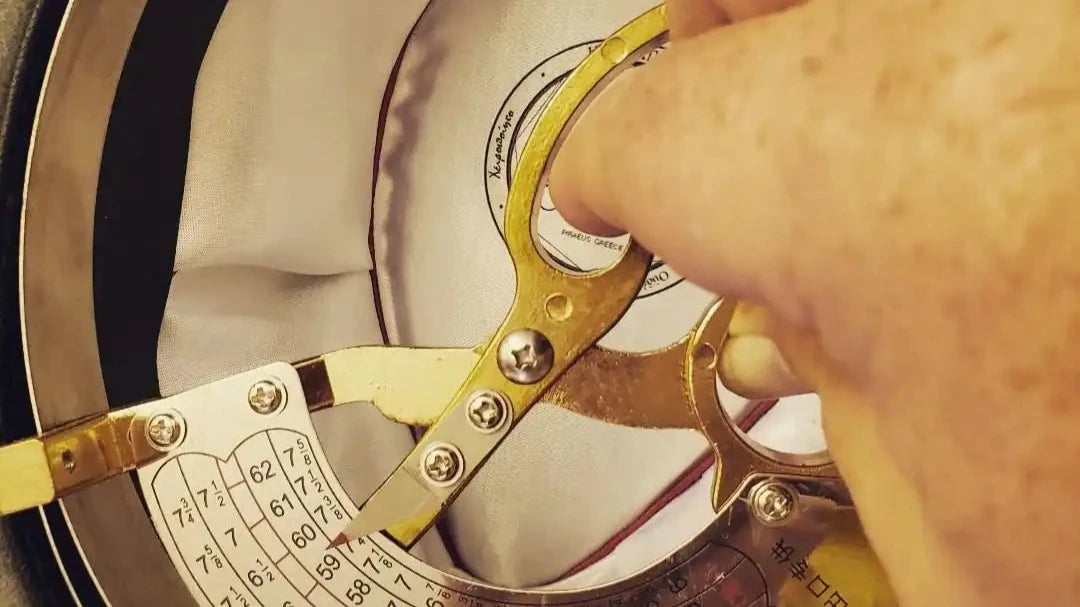
- Size Precision: Not just S/M/L, but exact measurements (52-64cm range)
- Crown Variations: Multiple heights and shapes, adjusted to face structure
- Brim Specifications: Width adjustments in quarter-inch increments
- Personal Touches: Initials, specific ribbon colors, unique combinations
- Material Choice: Multiple felt options for the same style
The Block Secret
Here's insider knowledge: authentic makers often create custom blocks for unusual head shapes. This process — involving 3D scanning or careful measurement, modeling, and printing or carving — takes up to a week. No mass producer would consider this economically viable.
When examining a hat, look for:
- Perfect fit without pressure points
- Consistent contact around the entire head
- No gaps at temples or forehead
- Comfort that improves with wear
Timeline and Communication: The Human Element
Production Timelines Tell Truth
- Mass Production: 2-3 days, ships immediately
- Authentic Handmade: 3-4 weeks, includes drying and shaping time
- Custom Block Creation: Additional week for unique requirements
Be suspicious of "handmade" claims with immediate shipping. Genuine craftsmanship requires time for:
- Material preparation and treatment
- Multiple shaping and drying cycles
- Careful finishing and quality inspection
- Proper packaging in hat boxes (not poly mailers)
Direct Maker Access
Authentic workshops provide direct communication with the actual maker — often via WhatsApp or email. You're discussing your hat with the person who will create it, not a customer service representative reading from a script.
Signs of genuine maker communication:
- Knowledgeable responses about technique
- Willingness to discuss custom options
- Photos of work in progress
- Honest timelines without pressure
- Post-purchase care instructions

Geographic and Heritage Indicators
Workshop Location Matters
Authentic hat making concentrates in specific regions with historical traditions:
- Greece, Denmark, Romania: Small workshops maintaining European traditions
- Italy, France, Germany, UK: Family operations in specialized regions
- Ecuador: Panama hat weaving heritage
- Portugal: Felt production expertise
- USA: Western and dress hat specialization
Mass production typically originates from:
- Large facilities in countries with low labor costs
- Industrial zones without hat-making heritage
- Locations chosen for economics, not expertise
The Heritage Test
Genuine workshops tell specific stories:
- When established (year, not "over X years")
- Who founded it (actual names, not corporate entities)
- Where located (specific address, not just country)
- How techniques were learned (apprenticeship, family tradition)
- Why they continue (passion, not just profit)
Price Psychology: Understanding True Value
The Pricing Sweet Spot
Authentic handmade fedora hats occupy a specific price range that reflects:
- Premium materials ($50-150 per hat in raw materials alone)
- Skilled labor (20+ hours per hat)
- Workshop overhead (rent, tools, utilities)
- Sustainable business margins (not venture capital subsidized)
Red Flags in Pricing:
- Under $200: Impossible for genuine handmade with premium materials
- Over $2000: Often brand markup rather than craftsmanship value
- Constant sales: Authentic makers rarely discount
- One price fits all: Different materials should mean different prices
The Value Equation
Consider cost per wear over decades:
- Mass-produced: $100 hat lasting 2 years = $50/year
- Authentic handmade: $500 hat lasting 20+ years = $25/year
Heritage collectors understand this mathematics. They're not buying a hat; they're acquiring an heirloom that appreciates in character while mass-produced alternatives deteriorate.
Visual Inspection Checklist
When examining a potential acquisition, systematically check:
Exterior Examination
Interior Investigation
Handle and Feel

The Provenance Paper Trail
Authentic workshops provide documentation that factories cannot:
What to Expect
- Detailed receipt with specific descriptions
- Care instructions tailored to your material
- Maker's business card or contact information
- Sometimes: certificates of authenticity
- Often: personal notes from the maker
What's Suspicious
- Generic receipts without details
- No care instructions
- Untraceable seller information
- Inflated "certificates" with meaningless seals
- Marketing materials instead of documentation
Common Deceptions Exposed
"Handmade" Manipulation
The term "handmade" has no legal protection. Factories exploit this by having workers hand-place machine-made components, technically making it "handmade" while missing the point entirely.
True handmade involves:
- Hand-shaping of the crown
- Manual brim flanging
- Individual attention to each piece
- Adjustment based on the specific felt's behavior
- Problem-solving unique to each hat
The "Portuguese Felt" Fallacy
Many mass producers advertise "Portuguese felt" as a quality indicator. While Portugal produces excellent felt, the origin of raw material doesn't guarantee authentic construction. A factory in any country can import Portuguese felt and machine-press it into mediocre hats.
What matters: How the felt is handled, not just where it originated.
The Heritage Brand Trap
Some mass producers acquire defunct heritage brand names, trading on historical reputation while producing in modern factories. Research current ownership and production methods, not just brand history.
The Collector's Acquisition Framework
Pre-Purchase Investigation
- Direct Communication: Contact the seller with specific questions about construction methods
- Photo Requests: Ask for detailed images of sweatband stitching, crown interior, brim edge
- Timeline Inquiry: Confirm production time — be suspicious of immediate availability
- Customization Test: Request a minor modification — authentic makers accommodate, factories refuse
- Reference Check: Ask for examples of previous custom work
The Size Revelation
This single factor often exposes mass production. Authentic makers offer:
- Specific size measurements (e.g., 58.5cm)
- Accommodation for long oval or wide oval shapes
- Solutions for sizes below 54cm or above 61cm
- Willingness to create custom blocks for unusual requirements
Mass production limits itself to S/M/L/XL, forcing compromise fits.
Workshop Visit Possibility
Genuine makers often welcome visitors (by appointment). The ability to see your hat's birthplace, meet its maker, and understand the process adds immeasurable value to heritage collectors. Mass producers offer factory tours at best, individual workshop visits never.

Long-Term Considerations
Aging Gracefully
Authentic handmade fedora hats improve with age:
- Felt develops patina
- Conforms increasingly to your head
- Sweatband softens and personalizes
- Character marks tell stories
Mass-produced hats deteriorate:
- Synthetic materials crack
- Glued components separate
- Colors fade unevenly
- Shape collapses irreversibly
Maintenance and Repair
Authentic makers often provide:
- Lifetime adjustment services
- Repair capabilities
- Replacement components
- Refreshing and cleaning
Mass production offers: warranty replacement at best, usually nothing.
The Heritage Value
Consider future generations. Authentic handmade fedora hats become:
- Family heirlooms with providence
- Collectibles that appreciate
- Stories worth telling
- Connections to craft traditions
Mass-produced hats become: landfill.
Making Your Decision
For Serious Heritage Collectors
Prioritize these factors:
- Material authenticity (beaver or rabbit felt)
- Construction quality (hand-shaped, sewn components)
- Maker accessibility (direct communication)
- Customization capability (especially sizing)
- Workshop providence (established tradition)
Red Lines to Never Cross
Never accept:
- Glued sweatbands
- Synthetic felt blends
- Generic sizing only
- No maker identification
- Immediate shipping of "handmade" items
The Investment Perspective
Frame purchases as:
- Cost per decade of wear
- Heritage value for descendants
- Supporting craft preservation
- Acquiring wearable art
- Building curated collections
Frequently Asked Questions
Q: Can mass-produced hats ever match handmade quality?
A: In pure technical terms, modern machinery can achieve impressive precision. However, it cannot replicate the character, customization, and soul that comes from individual craft attention. More importantly, mass production's economic model prevents using premium materials and time-intensive techniques that define true quality.
Q: How can I verify a workshop's authenticity claims?
A: Request specific information: workshop address, establishment date, maker's name, and training background. Search for consistent history across multiple sources. Genuine workshops have verifiable stories, often spanning years or decades. Check for consistent presence in craft communities and exhibitions.
Q: Why do some "handmade" hats cost less than others?
A: Several legitimate factors affect pricing: material grade (wool vs. beaver felt), workshop location (cost of living varies), experience level (master vs. journeyman), and business model (direct vs. retail). However, drastically lower prices usually indicate compromised materials or mass production techniques.
Q: What if I can't afford authentic handmade prices?
A: Consider: buying one exceptional piece instead of several mediocre ones, choosing rabbit felt over beaver for cost savings while maintaining authenticity, or looking for workshops in regions with lower operating costs but maintaining traditional techniques. Avoid the false economy of cheap imitations that require frequent replacement.
Q: How do I spot fake vintage hats sold as authentic handmade?
A: Examine wear patterns — authentic vintage shows consistent aging. Check construction techniques against era-appropriate methods. Investigate providence claims. New handmade recreations of vintage styles should be clearly marketed as such, not misrepresented as original vintage pieces.
Q: Can I learn to make these distinctions without handling many hats?
A: While handling develops expertise fastest, studying detailed photography, reading technical descriptions, and engaging with knowledgeable communities builds recognition skills. Many collectors develop excellent judgment through careful online research before making their first purchase.
Q: Do authentic makers ever use any machinery?
A: Yes, selective tool use doesn't negate handmade authenticity. Sewing machines for sweatbands, electric irons for pressing, or modern steamers for shaping are tools that assist craft, not replace it. The distinction: machines as tools versus machines as autonomous producers.
Q: What about limited editions from major brands?
A: Brand limited editions often represent restricted quantities, not handmade construction. Investigate actual production methods. Some heritage brands maintain handmade lines alongside mass production — research specific model construction, not just brand reputation.
The Bottom Line for Heritage Collectors
Identifying authentic handmade fedora hats requires developing an educated eye and understanding the economics of genuine craftsmanship. Mass production excels at imitation but cannot replicate the fundamental qualities that make handmade pieces worthy of collection: individual character, premium materials, custom fit, maker relationship, and heritage value.
For collectors building legacy wardrobes, the choice becomes clear. Authentic pieces from genuine workshops — whether a Greek operation established in 2014 or centuries-old establishments — offer value that transcends price. They represent living tradition, wearable craft, and future heirlooms.
The knowledge to distinguish authentic from mass-produced empowers collectors to make informed investments. Each genuine acquisition supports craft preservation, rewards skill development, and maintains traditions that industrial production would happily eliminate.
Your collection should tell a story worth preserving. Choose pieces that honor the past, serve the present, and inspire the future.
When examining potential acquisitions, trust your developing expertise. Authentic handmade fedora hats reveal themselves through countless small details that mass production cannot economically replicate. The more you learn to see, the clearer the distinction becomes.

